Swift Student Challenge 2026 entry
Quiet Mind
A record of anxious moments that a parent can bring to the clinic.
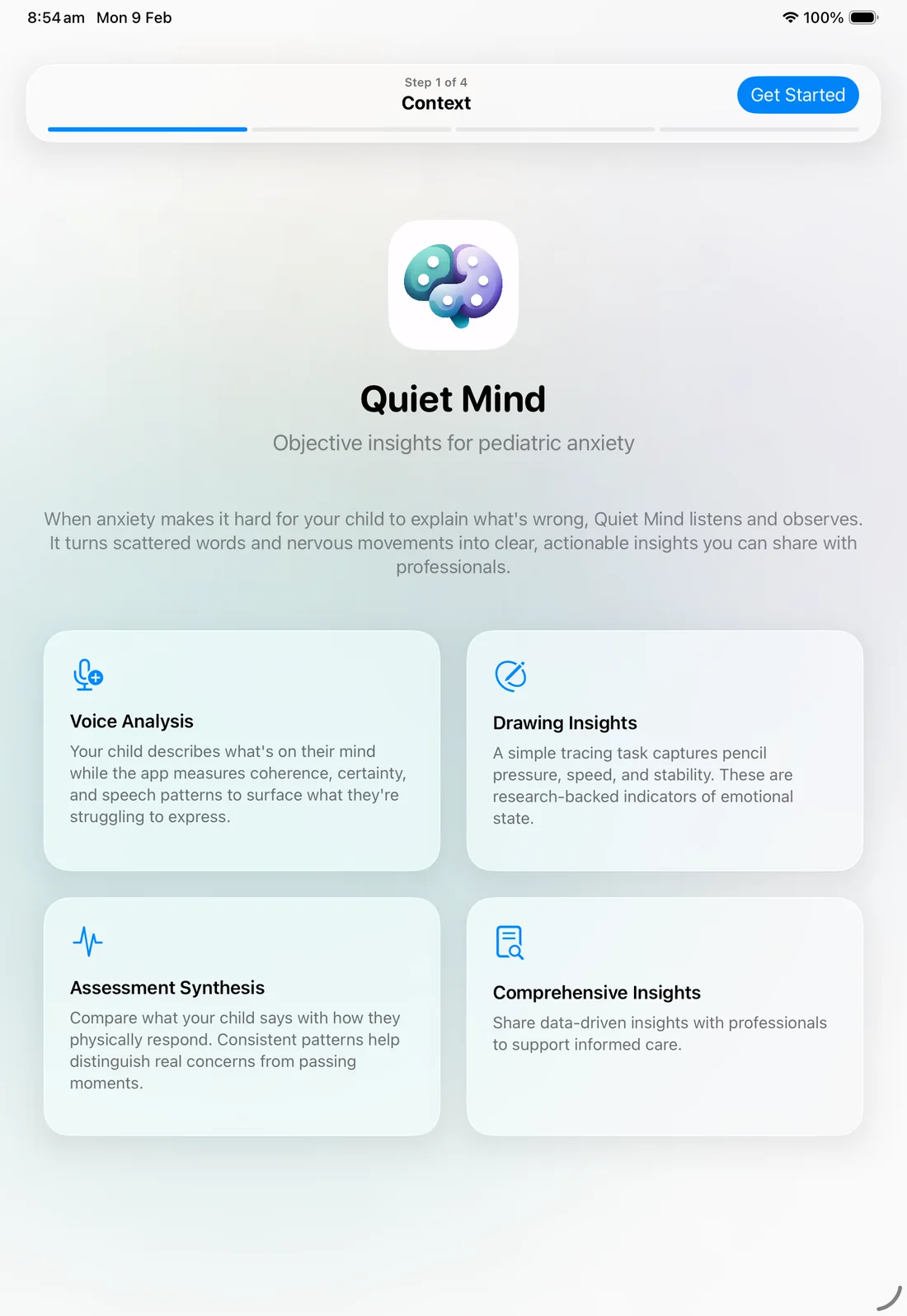
Quiet Mind helps parents understand a child's anxiety episodes through signals measured on the device: how the child speaks, and how they draw. Nothing leaves the iPad.
My younger brother lives with anxiety, and he draws to settle himself. As the anxiety rises his drawing changes in ways you can measure: harder pressure, faster strokes, less control.
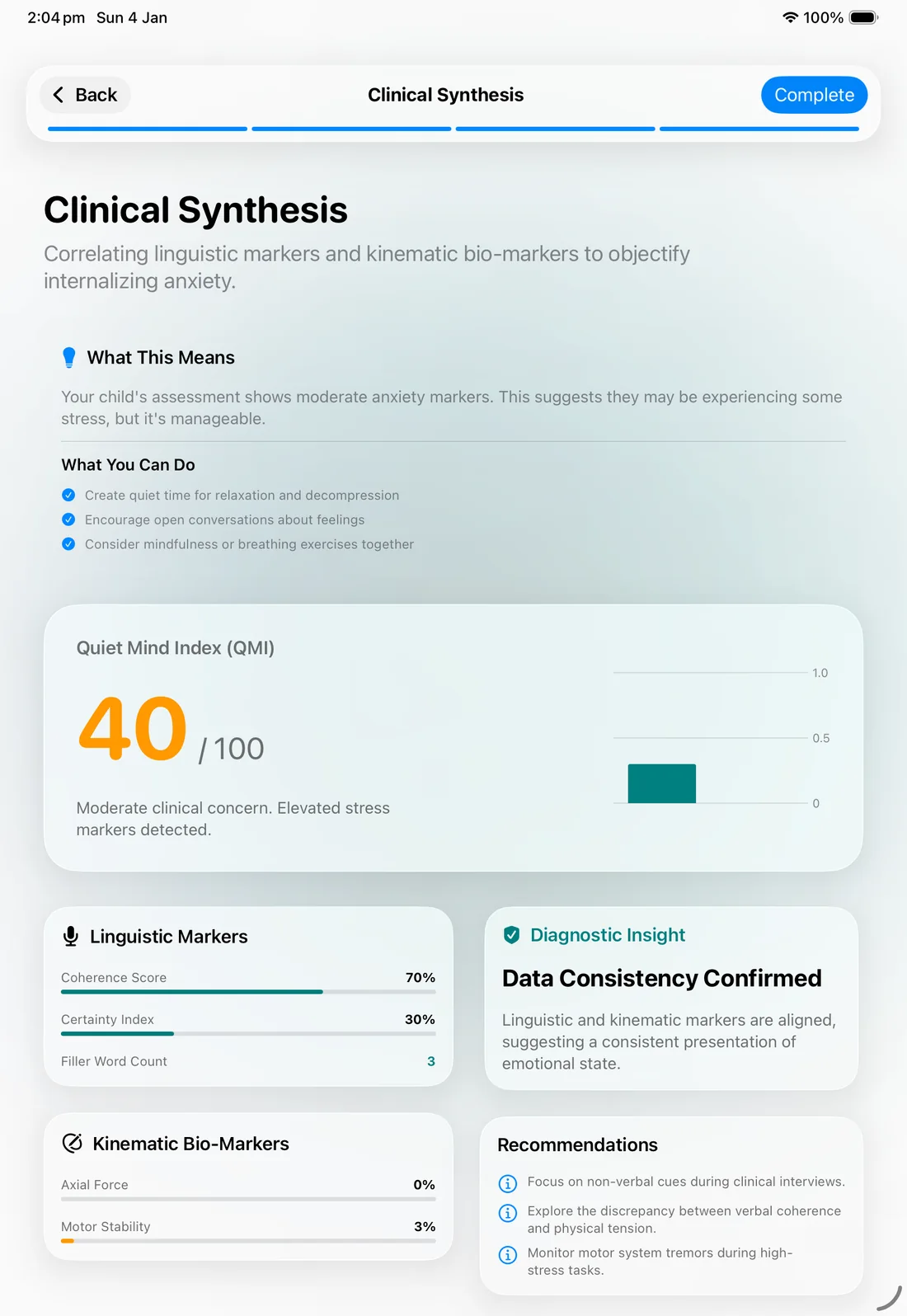
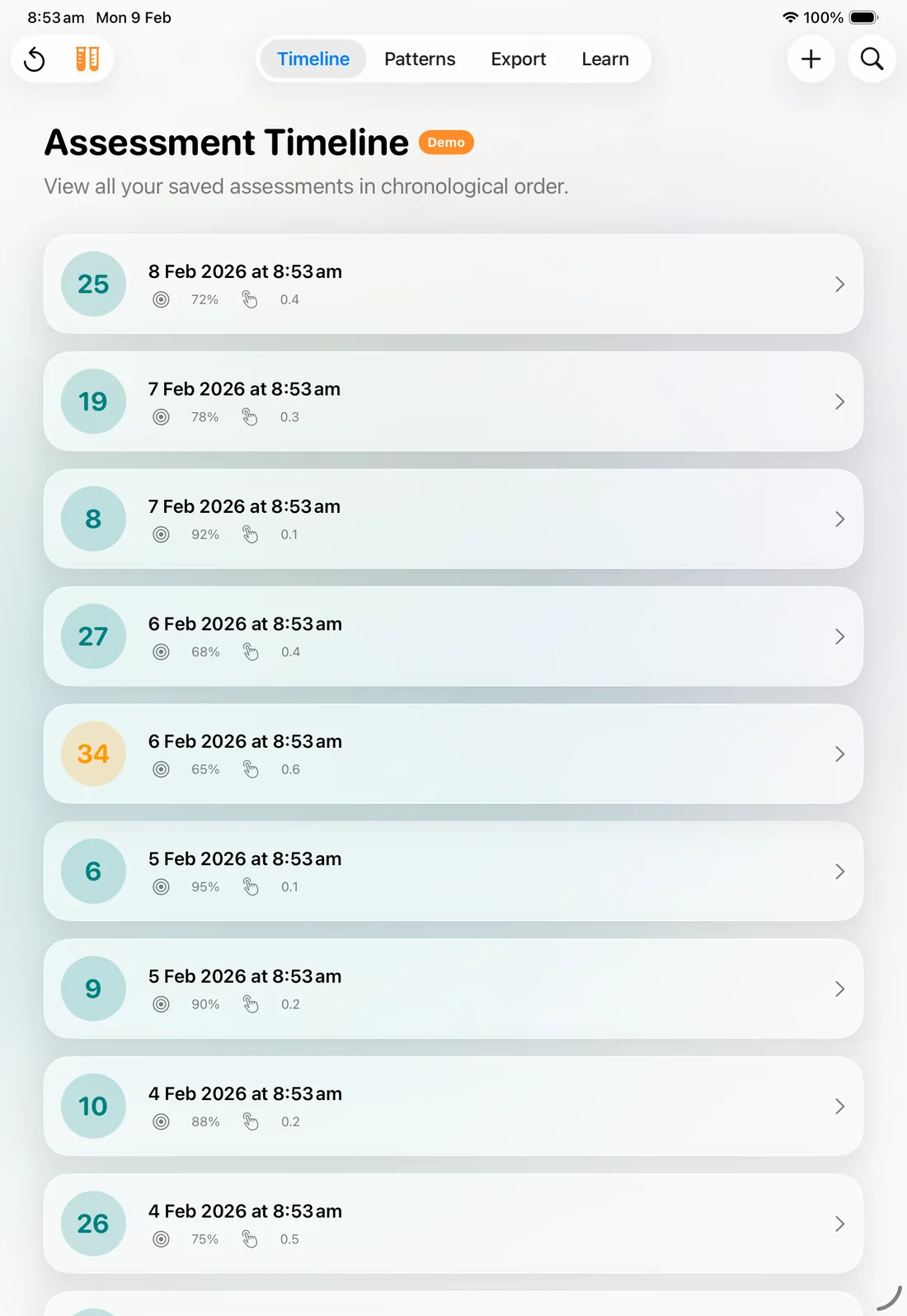
Quiet Mind records a voice note and a short drawing task together, scores the episode, and builds a timeline. Parents arrive at an appointment with dated episodes and recurring patterns, where before they had a rough memory.
It is an app playground built for the 2026 Swift Student Challenge. It makes no medical claims.
- Year
- 2026
- Runs on
- iPad
- Built with
- SwiftUI, Foundation Models, NaturalLanguage, PencilKit, Accelerate, SceneKit, SwiftData
How it is built
Pencil pressure, per point
A custom gesture recogniser sits under PencilKit and records force, time and position for every coalesced touch.
Meaning, not keywords
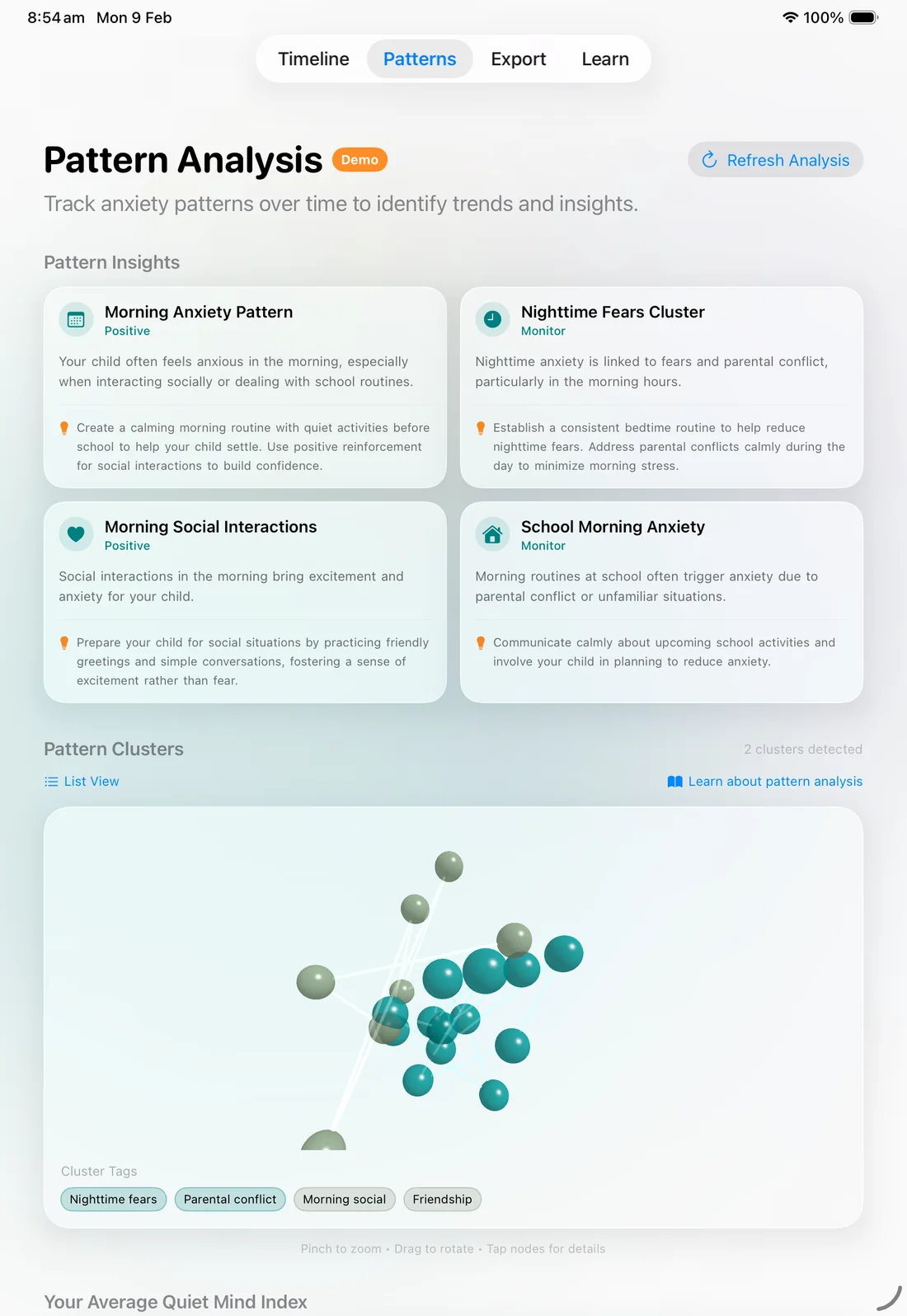
NaturalLanguage turns each transcript into a sentence embedding. DBSCAN groups similar episodes, with the distance maths done in Accelerate.
Typed answers from the model
Foundation Models returns Swift types through @Generable, so the app never parses free text.
An accessible fallback
The 3D cluster view cannot be read by VoiceOver, so the same data also comes as a list. The list appears on its own when Reduce Motion is on.

Next project
Shelf